
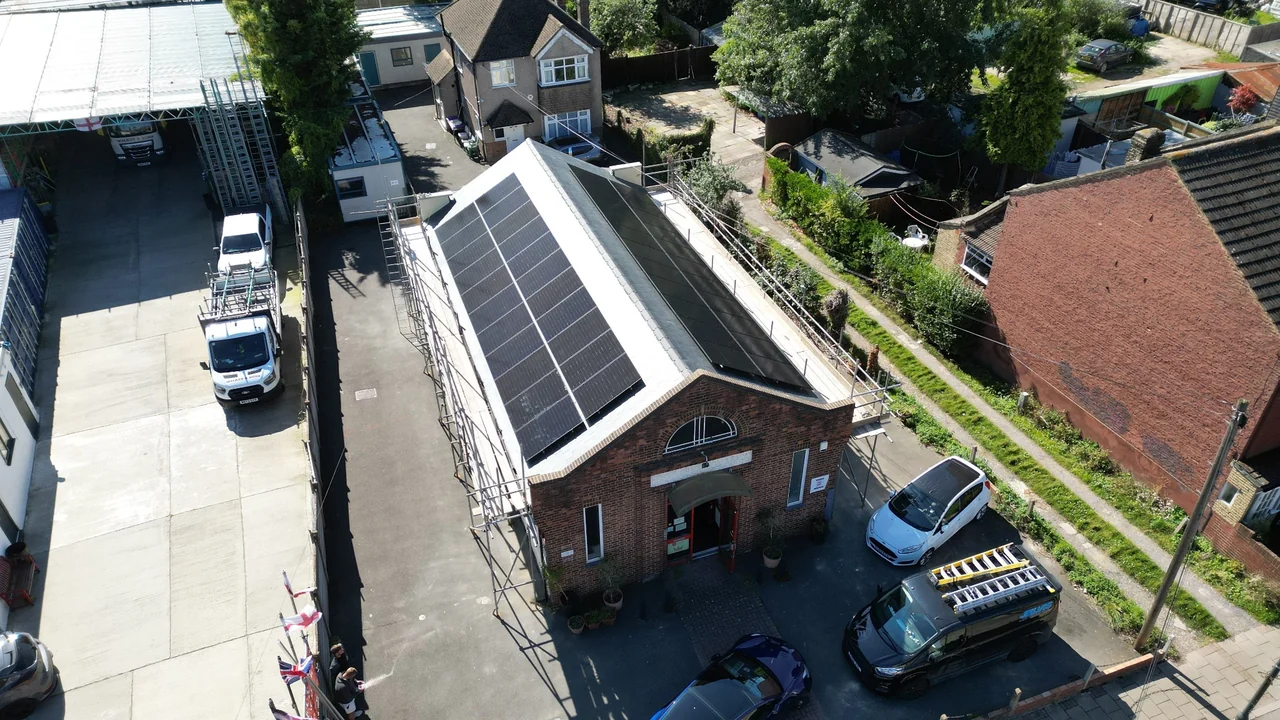
Understand the site before choosing the array
For a workshop, office, warehouse or hospitality business, operating hours can be as important as annual electricity consumption. A site that uses substantial daytime power has a different starting point from one with most demand at night or on a seasonal schedule.
Collect recent bills and, where available, half-hourly consumption data. Note planned equipment, EV charging, changes to working hours or an expansion. Jelvis can use that information to discuss a system around the site rather than simply filling every available roof space.
Make roof condition an early question
Establish the roof covering, expected remaining life, access arrangements and any planned repairs. Installing panels before an imminent roof replacement can create avoidable removal and reinstatement work. A re-roof project may need its solar PV design coordinated with the roofing programme.
Roof construction and load capacity need appropriate assessment. Tell us about fragile materials, restricted access, nearby buildings and operational areas that must remain clear. Any structural or specialist work required should be identified and assigned in the project scope.
Check the electrical route and connection
The roof and the electrical installation are part of the same project. Existing distribution boards, supply capacity, inverter positions, cable routes and metering all affect the approach. Long routes or required electrical upgrades belong in the initial review.
Grid-connection requirements depend on the proposed system and the network serving the address. Applications and any export controls should be considered before committing to an installation programme. Network acceptance, charges and timescales should not be assumed from another site's outcome.
Build a transparent business case
A proposal should distinguish electricity used on site from electricity exported and show the rates and usage assumptions behind its forecast. Compare the likely demand during generation hours, not just total annual consumption. A generation forecast alone does not establish how much purchased electricity will be avoided.
Battery storage deserves a separate comparison. It may help where generation and demand occur at different times, but its capital cost, losses, output limits and operating strategy need to be assessed. Backup for business-critical loads is also a separate design decision, with clearly defined power and runtime requirements.
Plan installation around operations
- Identify any shutdown windows and authorised site contacts.
- Agree access, lifting arrangements and work-area restrictions.
- Clarify landlord consent and responsibilities on leased premises.
- Confirm roof, electrical, monitoring and connection work in the quotation.
- Define commissioning, handover, monitoring access and aftercare.
These decisions reduce the chance of a seemingly straightforward roof installation disrupting the business or leaving unresolved work at handover.
Send the right information first
Start with the address, building use, operating hours, electricity bills and your target programme. Roof drawings, supply details and consumption data are helpful when available; they are not required to begin a conversation.
Explore our commercial Solar PV service, electrical installation expertise and project photographs. We work across West Sussex and surrounding areas, with further travel considered for suitable projects.
Further reading: UK Power Networks: generation connections.